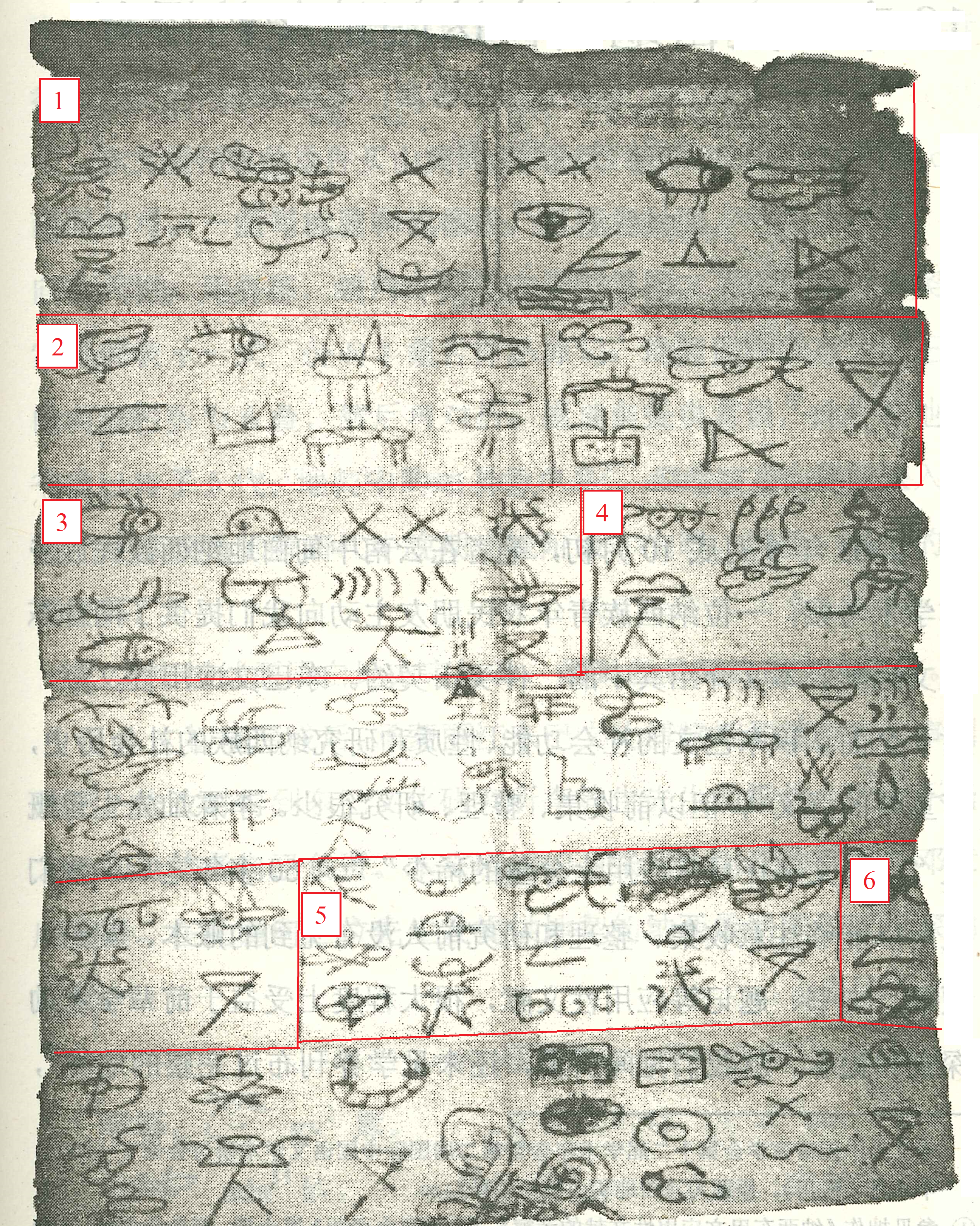
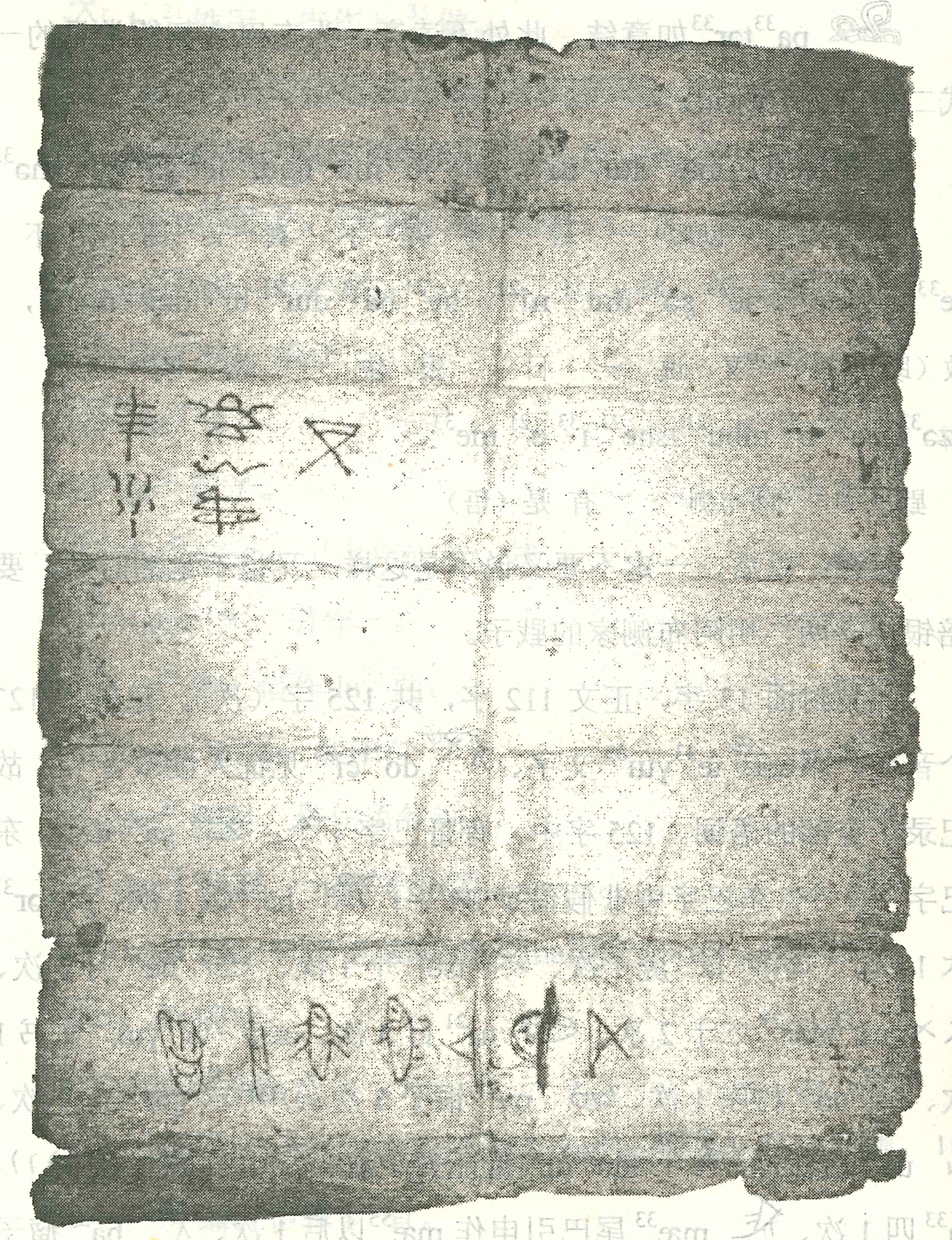
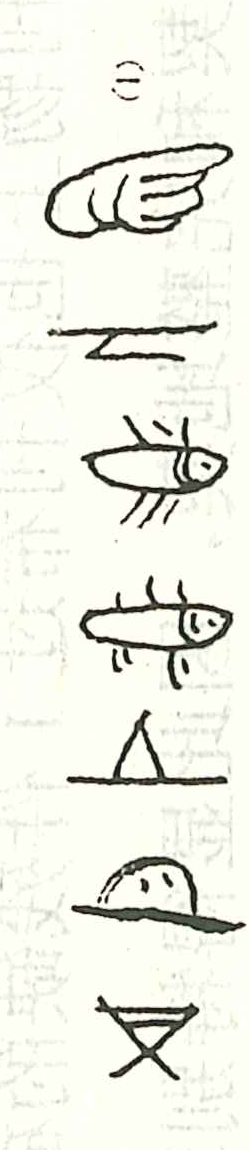
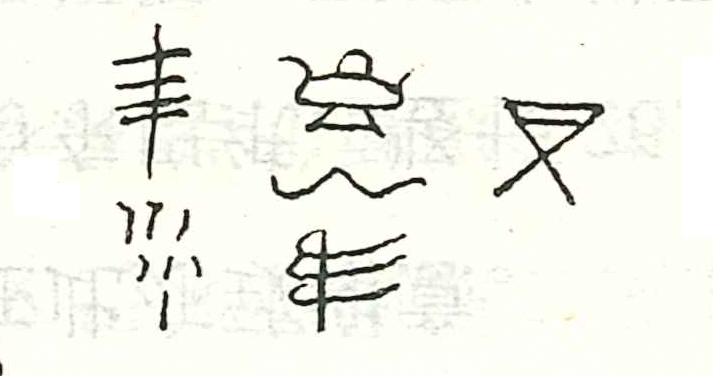
First of all, many apologies for my extended leave of absence from Naxi blogging. Has it really been four months?

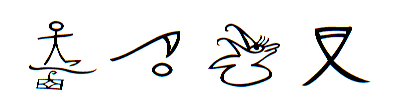
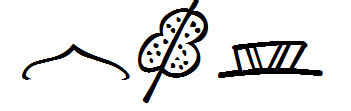
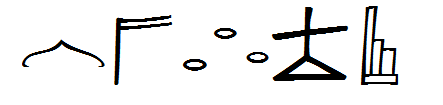
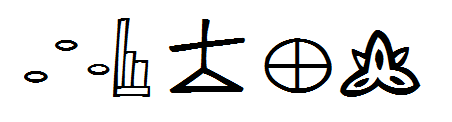
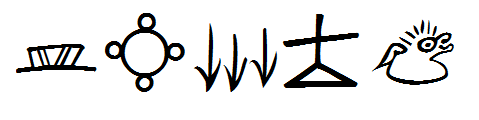
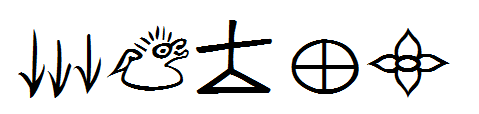
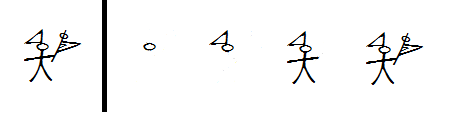
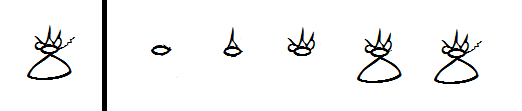
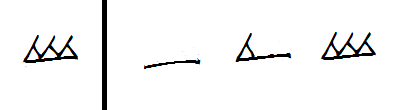
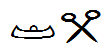
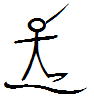
I’ve always wanted to translate some more examples of secular Dongba text as there are plenty of people who still believe the script to be not much more than a ritual tool. The following text (essentially a record of a prescription payment) was collected and published by Naxi scholar Yu Suisheng 喻遂生 in his Naxi Dongbawen Yanjiu Conggao 纳西东巴文研究丛稿 (pp 264-66). It is an extract from the notebook of an old Dongba priest, who would jot down notes to help him remember important pieces of information. The text is not dated, but is a good example of everyday use of the script.

(more…)

The following article will be published in the third issue of Dongba Culture 《东巴文化》, the newsletter of the Lijiang Museum; many thanks to the Museum and Zhao Xiuyun, the translator. Unfortunately, I don’t have a copy of any of the original scriptures mentioned in the article.

A note on some of the terminology
The article was originally written in Chinese, and did not contain any Naxi phonetics or Dongba script. Proper Naxi nouns are therefore transcribed in pinyin. Using my dictionaries I have traced the original Naxi for some of the terms: (more…)

One of my favourite quotes from the three character classic is 玉不琢,不成器。 人不学,不知义. In English:

If jade is not polished,
it cannot become a thing of use

If a man does not learn,
he cannot know his duty towards his neighbour

(translation by Herbert Giles)


Interestingly, this can be rendered in Naxi thusly (according to my collection Dongba aphorisms 常用东巴文字明言俗语
, written by He Baolin 和宝林):

polishjade

Naxi:

o21 tʂ’u21 me33 ze33 na21 me33 piə33

so21 bɯ33 me33 ɣ33 du21 me33 sɪ33


English word-for-word:

green jade / black jade / not / cut (phonetic loan from ze33, flying ghost) / item, instrument (phonetic loan, from na21, black) / not / become (phonetic loan from piə33 seashell)

study / want (phonetic loan from piə33 kɯ55, belt) / intention (phonetic loan from ɣ33, dance) / wisdom (this character represents the male God of wisdom)/ not / understand (phonetic loan from sɪ33, sage)


So the Naxi is roughly equivalent to the English “jade that is not cut will not become an instrument, [he] who does not have the desire to study will not understand wisdom”.

I find it odd that the three character triplets have been mangled in the Naxi by the seeming insertion of extra characters: the first line uses two characters for jade (one for green, one for black), and the second line by the use of both ‘want’ and ‘intention’, which again seems superfluous.

That said, I am by no means fluent in Naxi so there may be reasons for the wording beyond my (very) limited comprehension.

On a recent visit to Shaoxing, we had the good fortune of being given a tour around the Mausoleum of Yu the Great (大禹陵), which was refreshing in that there were far fewer tourists paying their respects to Yu the Brilliant (I like to think of him as a kind of backwards version of King Canute) than there were visiting Lu Xun’s ‘former residence’ in the main part of town. Lu Xun’s old gaff was mobbed.

On a path leading up the hill that is, according to legend, the final resting place of the mythical tribal leader, we passed a large ceremonial cauldron with two characters inscribed on its front (see below).

(more…)

I’ve been meaning to write this post for some time, but work, and an increasingly busy schedule, have been constantly getting in the way.

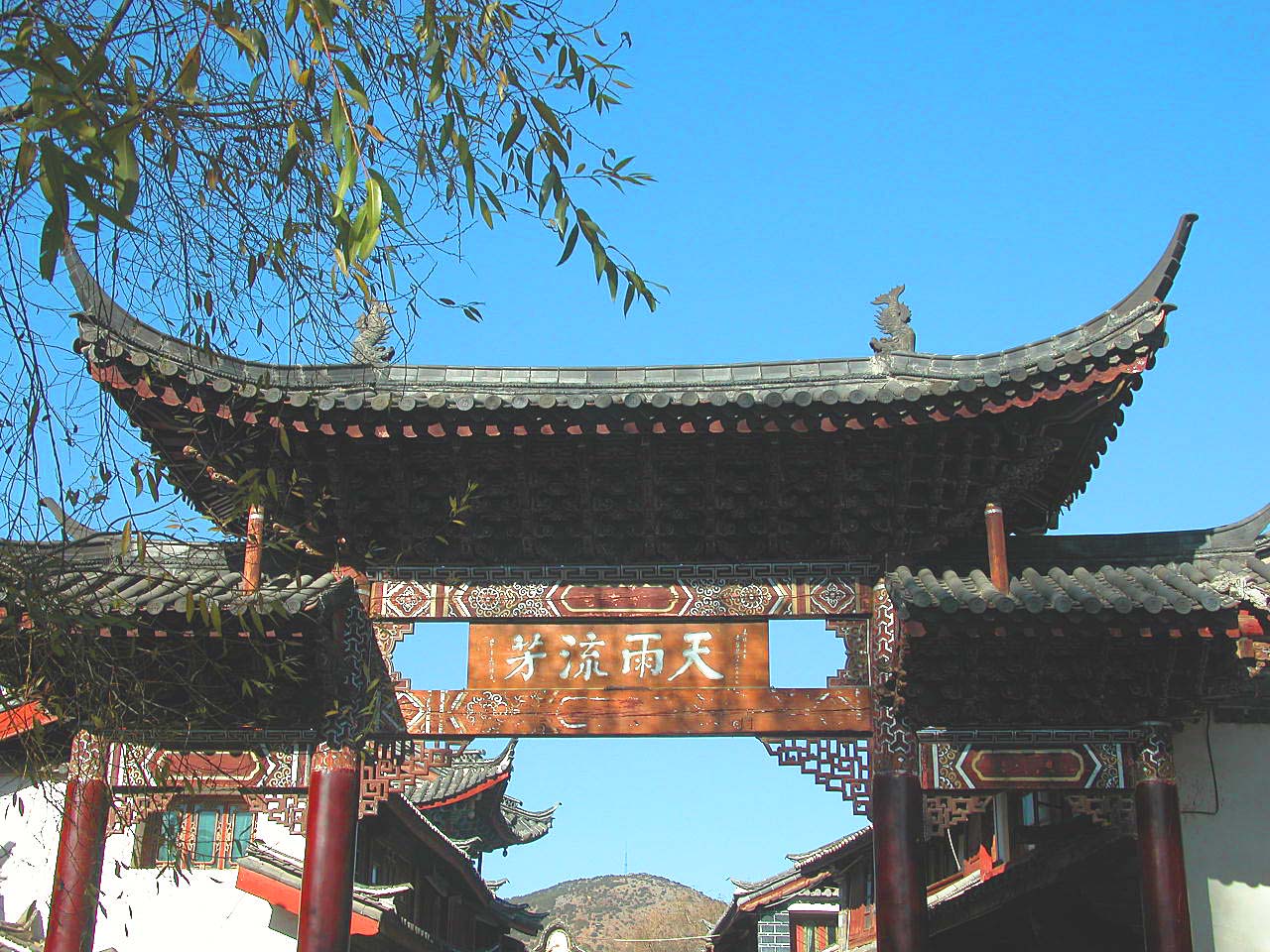
I noticed on a recent trip to Lijiang that the shop signs along some of the city’s major shopping streets have all been redone – now with added Dongba script – sometime over the past half year. Previously a majority of shops in the old town proper had shop names translated into the Dongba script on their signs, but now most of the shops on Minzhu Road 民主路 (a busy new-town thoroughfare that loops round the western edge of the old town) boast Dongba script on their signage as well. I assume this is the result of local government policy.

This is interesting because many major brands have been forced to come up with Dongba names, but it’s also slightly irrelevant because the vast majority of people will have no idea what the script says.

(more…)

In his 《纳西族象形文字东巴经中关于人类自然产生的朴素观》 or, loosely, ’The simplistic view that human life was naturally occurring, as found in the pictographic Naxi Dongba scriptures’ 李国文 Li Guowen states that according to Naxi scripture, humans weren’t always humans, we instead underwent a long period of historical development before becoming ‘human’.

Anyway, Li points out that the character monkey, monkey, read y21, is also used to represent y21, ‘ancestors’ in the Naxi language (as they share the same pronunciation). In Fang’s dictionary, it appears as a phonetic loan character for ‘ancestors’. It’s worth noting that father-in-law, y21 p’e33, is father-in-law; the y21 is represented phonetically by the monkey head and the p’e33 by the character for washcloth, p’e33.

Whilst Rock doesn’t note ‘ancestor’ as a common reading for y21, he does have the entry y21 gə33, oftheancestorswith the meaning “the ancestors’ (belonging to the ancestors)”. gə33 is the possessive particle in Naxi, similar to the Chinese .

But Li, while not going so far as claiming that the Naxi were the first to discover evolution, does note that the fact the monkey character is so used points to an implicit understanding that we share common ancestry with primates. I’m not quite convinced; a lot of research would need to be done to prove that it’s not just a phonetic loan, but it’s still an interesting little bit of knowledge. At any rate, some Dongba scriptures I’ve come across say that people evolved from frogs…

It’s not often that I manage to see any Dongba script whilst out and about (especially when I’m not in Lijiang), but it is sometimes used by designers in China for its unique aesthetic qualities.

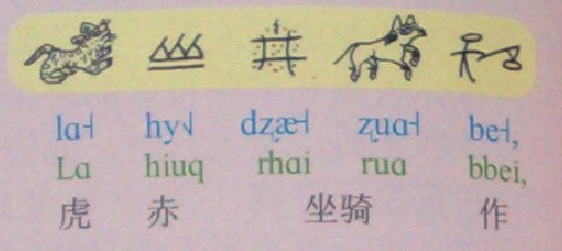
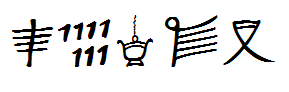
I was fairly surprised to see what looked like Dongba characters on an advert whilst riding the bus (on one of those horrid bus televisions) over the Qiantang River in Hangzhou, advertising the new Hangzhou Taobao/Koubei discount card. So as soon as I got home I did a quick check on the internet, and lo and behold, the card design has five Dongba characters representing the Chinese 吃喝玩乐行, or, eat, drink, play, have fun, travel.

Everyone in China will already know all about Taobao (an online marketplace) and Koubei (an online review site). The card allows you to get discounts in various stores across Hangzhou, and you can accumulate points that can then be exchanged for goodies, or so I gather.

card

There are a few differences in these characters to the ones in my IME (based on those collected in Fang Guoyu’s dictionary), for example the character they use for ‘drink’ depicts someone sitting down and the beverage is distinctly tea, but they are all completely recognisable.

We have (from top, clockwise):

singdzər33, sing

traveldʑə21, travel

dancets’o33, dance

eatdzɪ33, eat

drinkt’ɯ33, drink

I can’t find any high res images of the card, and I’m probably not going to be getting one myself, but here’s a low res version:

card2

(Note the ‘VIP’ in gold letters; the acronym has been so devalued of late in China that it’s basically meaningless now).

I find it interesting that mirror, kə33, is written thus in the Naxi Dongba script: week19.

For a start, it looks like a guy trapped in the sun. But it actually represents the reflection seen in a circular copper mirror, and the lines along the circle depict the shining, reflective nature of the mirror’s surface.

In contrast, the oracle bone character for the Chinese jian 监, observe from above, depicts a person looking into a bowl of water, to see their own relfection: jianoracle ; water being the most primitive form of mirror.

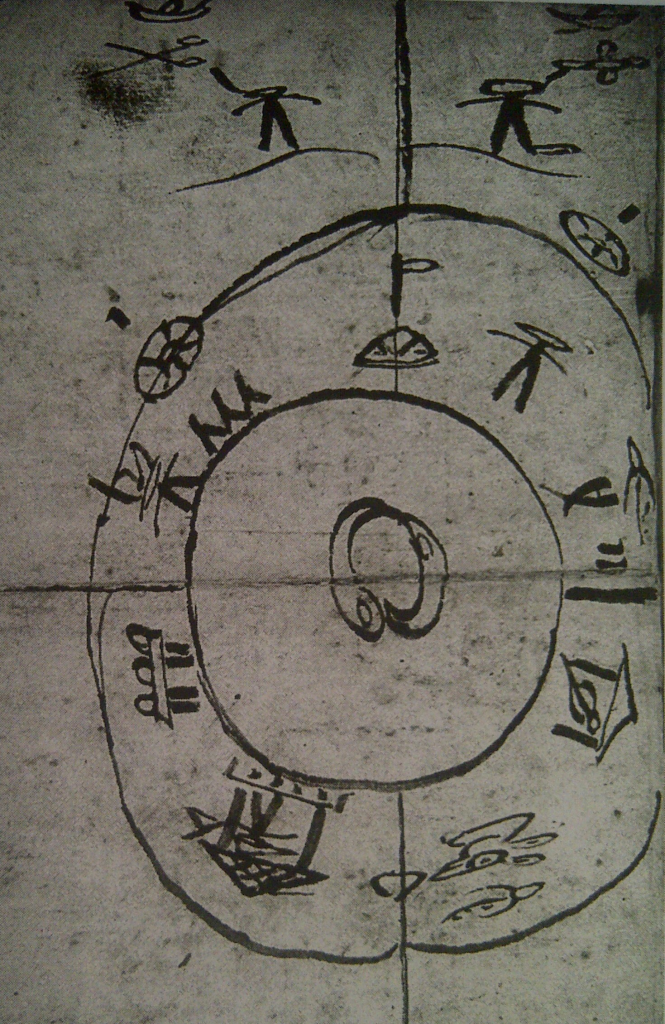
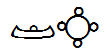
According to the oracle bone researcher Dong Zuobin, there is a pictographic Ruoka (’若喀’, a branch of the Naxi ethnicity) character for mirror that looks something like this: mirror2.  Again, this is a copper mirror, and Dong proposes that the markings along the edge indicate that it is of a Tang dynasty style, and thus comes to the conclusion that these copper mirrors only reached the mountainous Naxi areas of Northwestern Yunnan by the Tang dynasty.

I’ve seen a lot of copper mirrors in museums around China, and they have never seemed particularly reflective; but I suppose that’s just due to age and a thick layer of copper oxide. Genuine antique copper mirrors are, naturally, extremely valuable, so they’re definitely something to look out for in Lijiang’s many antique and bric-a-brac shops.

The Origin of the Horse, ho ʐua33 kɣ33 in Dongba, is a story that forms part of the Dongba ceremonial scripture used for redeeming the souls of the deceased, known as ‘presenting the funerary horse’. On the day of the ceremony, a funerary horse is presented to the deceased by their surviving children, to thank their parents for their upbringing. The funerary horse acts as a means of travelling to the land of the ancestors in the underworld.

You can see the scripture in full in the scriptures section of the website.

(more…)

Harvard University has a rather excellent digitised collection of Naxi manuscripts online here.

The collection contains 598 manuscripts and three funereal scrolls originally collected by Joseph Rock and Quentin Roosevelt, although only 21 manuscripts are dated (traditionally the Dongba scriptures are not dated), with the earliest being from 1826 and the latest from 1910.

The manuscripts all have their titles recorded in Naxi script and Naxi pinyin, presumably work done by Li Lincan and Zhu Baotian at the Institute.  The collection is worth a browse, but nothing is actually translated; they do however have a great collection of divination scriptures that I’m sure I will return to in the future.

Next Page »